
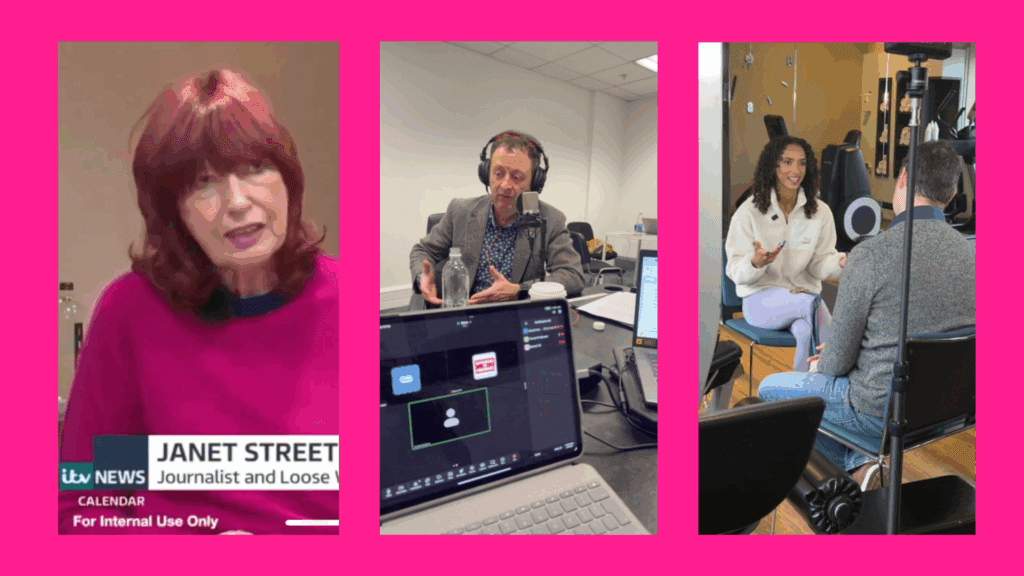
Whether it is a national breakfast TV programme, a regional radio show, or a successful entertainment podcast, producers are always looking for a little bit of celebrity sparkle.
The truth is, a celebrity has the capacity to get the audience’s attention in just a few seconds, sometimes it doesn’t even matter that they are talking about.
Third-party spokespeople are a major asset for broadcast PR campaigns. Producers are more likely to book a story when the guest offered is not, what they call, ‘a corporate’.
This is because third parties are often perceived to be more objective, independent and entertaining than a corporate spokesperson.
In this blog, we’re going to explore the reasons why you should consider including a celebrity in your next broadcast PR campaign, and the risks attached to it.
The pros of adding a celebrity to your broadcast PR campaign
Having a celebrity attached to your campaign can instantly increase the value of a story. Ultimately, what broadcasters want if for audiences to tune in and stay there. A household name might just be the hook which will make that happen.
Producers are always seeking for human interest stories, regardless of whether this human is a celebrity or not. What they want is an impactful story with a real person to bring it to life. Celebrities can easily play this role, make themselves relatable to the audience. The cherry on the cake is when their association with a campaign is authentic.
Ideally, you will want to get an endorsement from a celebrity who has genuinely used your product or service and has found it helpful, or perhaps they really believe in and share your brand values. For some campaigns they can even play the role of case study, for example when raising awareness of an illness they may have experienced. Regardless of who the person is, an interview will always be better when the subject is speaking from true personal experience.
The public tends to trust a celebrity endorsement. Generally, celebrities who are successful in a particular field are seen to have better judgement or knowledge about that area than anyone else. As a result, any related product recommendation will come across as very credible.
And precisely because the public trusts the criteria of well-known personalities, they will assume that they will have done their due diligence and considered carefully whether to take part in a campaign. Surely, they wouldn’t put their reputation at risk unless they were confident that the cause is worth it.
The power of celebrity
By definition, celebrities are people who the public admire and look up to – that’s why they are well known. With admiration often comes aspiration, a desire to be more like someone. Well, if you can’t have their talent or money, the closest thing it to use the same products or services they use, like the same brands they like. Some people will think: If it’s good enough for them, it’s probably good enough for me as well!
There is also the issue of perceived impartiality. Broadcasters have strong editorial guidelines which prevent them from airing segments which are deemed to be too advertorial or give undue prominence to a product or brand. People at home will know that celebrities are very likely being paid to do an interview on behalf of the brand. However, they will still feel that this is more impartial than them taking centre stage in an advert for the same brand.
Finally, celebs have a lot of influence among their fan bases. This can unlock a whole new segment of potential customers who otherwise may not have given your brand a chance.

The risks of partnering with a celebrity
As we have just explored, there are many pros to including a celebrity in your broadcast PR campaign, but there are also some risks you need to be aware of.
A celebrity has the power to elevate a broadcast PR campaign, but it is not enough by itself to make it a success – you still need to create a good story that will be interesting to audiences. The exception are those A-listers who wouldn’t otherwise give any media interviews. But if this is not the case, producers know that they can reach to their agent to put in an interview request (there are teams in every newsroom who focus solely on this) so they don’t necessarily need to give airtime to the campaign.
And in the same way that a celebrity can make your campaign, it can also break it. Everyone has a social media presence these days and for well-known personalities, it is just another aspect of the job. It is true that those who are very famous, or not very technically minded, will have a team of professionals around them drafting every single social media post, making sure all content is under control. However, some personalities will still run their social media accounts and speak freely. This means that any comment they make, any opinion or political statement, can potentially go viral… for the wrong reasons.
If it does go wrong....
If this happens to a celebrity who is currently associated with your brand, it can have a potential negative impact on your reputation. Your customers and people on social media may even call for you to cut ties with them, inevitably being forced to make a decision or statement that you don’t necessarily want to. Admittedly, this doesn’t happen very often, but the risk is there.
Celebrity influencers are a result of the digital age. They have become known to the public due to the content they share on their social media platforms. Some have a specific talent or knowledge, others are popular for sharing information about their personal life. And with popularity on social media, comes the opportunity to become involved in PR campaigns. For some, this is how they make a living.
We have previously described how the public trust celebrity endorsements, but this may not necessarily be the case when the celebrity involved is known for promoting pretty much anything. In fact, it may raise suspicions among the public: Have they really tried the product? Does it really work? Or is the campaign just another source of income?

What you need to know about celebrity PR interviews
The one thing that you need to know about celebrity PR interviews is that they are hardly ever only about the campaign.
There will have always have to be a balance between what a celebrity is there to discuss and what the broadcaster really wants to ask about.
Both sides understand that there needs to be a compromise and normally what happens is that the campaign is discussed first and then the presenters move on to questions about the celeb’s professional or personal life. Or in the case of breakfast music radio, they may event want to play a game with them
How Shout! Communications can help
If you’re looking for advice on whether to add a celeb to your next broadcast PR campaign, here at Shout! Communications we specialise in helping brands secure media coverage on the most reputable broadcast outlets.
With our extensive industry experience and contacts across TV, radio, and online news, we make getting media attention easier than ever.
Get in touch at hello@shoutcommunications.co.uk
Get in Touch


