For PR professionals pitching broadcast media, the rules are changing fast. And this is epitomised by the London based newspaper City AM’s video and audio offering.
Written by Shout! Communications, a UK broadcast PR specialist agency
Traditional television formats are loosening, digital platforms are reshaping audiences, and newsroom structures are becoming more entrepreneurial.
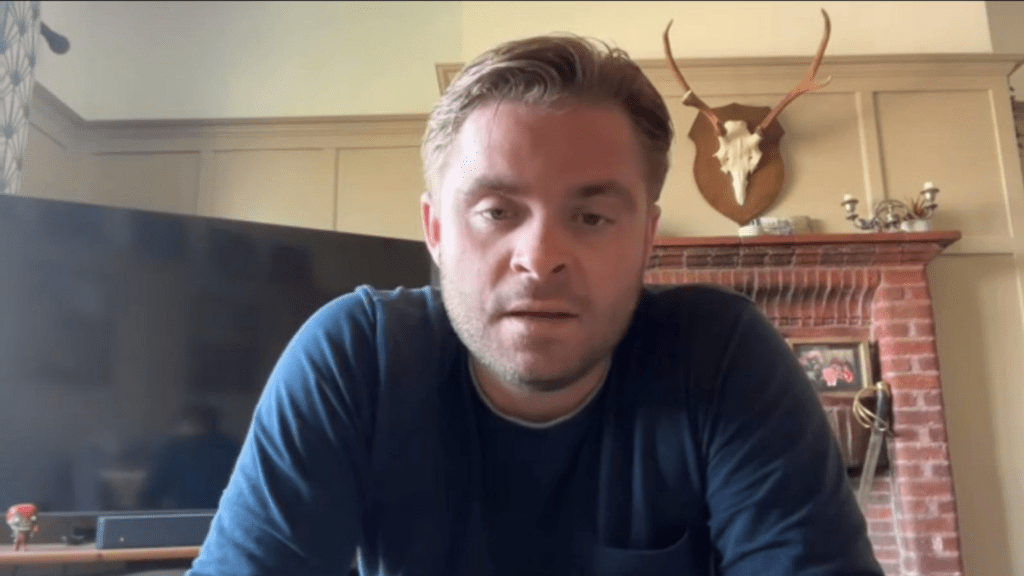
This was explained at a Shout! Communications Small Talk, featuring City AM’s Head of Video, Audio and Social, Martin Kimber.
Martin gave a revealing look at how modern business media is evolving — and how communications teams can successfully land coverage.
From studio-first interviews to the rise of podcast sponsorships, the conversation highlighted how PRs can adapt their media strategies to fit a digital-first newsroom. Here are the key takeaways:
From Linear TV to Digital-First Newsrooms
Martin began by reflecting on his move from Sky News to City AM, where he now leads video, audio and social output.
The shift from a large broadcaster to a smaller, entrepreneurial newsroom has been immense. At a major broadcaster, he explained, there is an entire machine behind every programme. In contrast, a smaller media organisation requires teams to be far more agile.
But that agility also unlocks opportunities.
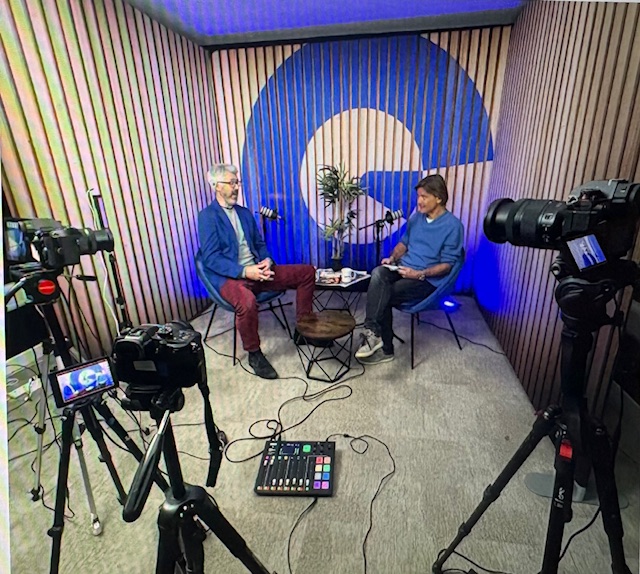
Martin and his team recently moved into a new studio space on Lower Thames Street in London, equipped with modern production technology, including a large digital screen backdrop. The new set-up enables rapid video production — from panel discussions on economic policy to one-to-one interviews with senior business figures. These are all opportunities for which Martin is seeking guest speakers.
The goal is simple: produce more compelling video content, faster.
The Rise of the Studio Interview
What Does This Mean For PR Teams?
For PR teams, this presents a clear opportunity.
Senior executives from major companies — particularly those making the news — are highly valuable guests. For example, the newsroom recently explored potential interviews with leaders from sectors such as
- automotive
- telecoms
- major technology and financial brands
The rule remains familiar to anyone who has pitched broadcast before:
The bigger the brand, the more flexible editors can be about the seniority of the spokesperson.
A New Podcast Opportunity For Brands
How To Get A PR Story On The Podcast
The podcast is looking for editorial content, but is also seeking financial sponsorship for which a brand might expect recognition on several levels, including:
- Short video clips for social media
- Newsletter integrations
- Host-read advertising
For PR professionals working with brands interested in sponsorship, this represents a growing opportunity and, Martin says, talks are already underway with several household names.
The target audience spans ambitious younger professionals through to senior executives — roughly 18 to 48 years old — who want business news delivered with a lighter, more engaging tone.
The podcast is looking for editorial content, but is also seeking financial sponsorship for which a brand might expect recognition on several levels, including:
- Short video clips for social media
- Newsletter integrations
- Host-read advertising
For PR professionals working with brands interested in sponsorship, this represents a growing opportunity and, Martin says, talks are already underway with several household names.
The target audience spans ambitious younger professionals through to senior executives — roughly 18 to 48 years old — who want business news delivered with a lighter, more engaging tone.
The inspiration? Martin sums it up as serious economics with the energy of American breakfast radio.
The Changing Rules of Broadcast Media
One of the most striking observations from the talk was how many traditional TV rules no longer apply in digital media.
In linear television, strict timings and advertising breaks dictate the structure of interviews. Digital platforms are far more flexible.
That means:
- Interviews can run longer (as long as they are editorially interesting enough!)
- Conversations can be split into multiple clips (so can be played out several times and on different mediums)
Martin and his colleagues regularly produce:
- long-form YouTube interviews
- short vertical social clips
- podcast segments
This multiplatform approach means a single interview can generate half a dozen pieces of content.

Understanding the Audience: Decision-Makers
One insight that surprised even the newsroom team was the composition of its social audience.
On LinkedIn, roughly 60% of followers are senior decision-makers — a remarkably high proportion compared with most social media audiences.
Other platform insights include:
- YouTube audiences skew 35–50 years old
- Instagram audiences include a large professional demographic
- Many viewers watch YouTube content on television screens, not phones
For PR professionals, this matters. Appearing in these formats means reaching senior business leaders, not just general consumers, so these are valuable opportunities.
The Platforms That Matter Most
While the newsroom publishes across multiple platforms, three stand out as strategic priorities:
- YouTube– Long-form interviews and discussions
2. LinkedIn– High-value B2B audience
3. Instagram – Short-form video clips
Content is also distributed on:
- TikTok
However, limited resources mean the same clips are usually distributed across multiple channels rather than individually tailored.
For PRs, this means one appearance can gain wide cross-platform exposure.
The Three Things PRs Should Always Provide
When asked how PR professionals can best help journalists and producers, Martin’s advice was clear:
- Strong Guests
Editors still prioritise credible, knowledgeable spokespeople who can explain complex issues clearly. In our opinion that means they probably need to be media trained.
- Useful B-Roll Footage
Unlike large broadcasters, smaller newsrooms may not have extensive archives of stock footage. B-Roll footage can therefore make a story appear much more attractive to a journalist. By B-Roll we mean 6m- 8 minutes of roughly edited video footage, that can be re-edited to illustrate a PR story. It needs to be story specific (eg illustrating a product or service), but relevant general pictures (such as traffic on a street, a shopping centre) can be useful too.
- Availability
Guests who can quickly appear in studio have a clear advantage, particularly when breaking news hits. We know that’s not always possible – spokespeople have day jobs – but flexibility will deliver more PR opportunities.
Why Over-Polished Spokespeople Can Backfire
Another interesting insight concerned media training.
While guests should always be prepared, overly rehearsed answers can be a problem — particularly in longer podcast-style interviews.
In digital formats, audiences prefer:
- authenticity
- real opinions
- less scripted responses
It’s still better to media train spokespeople than not, but for PR professionals, that means coaching spokespeople to sound natural rather than robotic.
The Future of Business Media
Looking ahead, the media landscape will continue to evolve.
There is growing industry discussion about whether traditional terrestrial television could eventually disappear, with broadcasters shifting fully to streaming platforms and online distribution.
At the same time, legacy media brands are rapidly modernising.
Even institutions like BBC Radio 4 now maintain strong social media presences, while other talk stations such as LBC have successfully adapted their content for digital audiences.
In short, experimentation is everywhere — and no one yet has the perfect formula.
The Bottom Line for PR Professionals
Despite all the changes in media technology, one truth remains the same.
Editors want great stories and compelling guests.
But the way those stories are delivered is evolving quickly.
For PR teams pitching to outlets like City AM, success increasingly depends on understanding the new hybrid media model:
- studio interviews
- podcast appearances
- short social video clips
- multiplatform distribution
In the modern newsroom, one good interview can power an entire day’s worth of content.
And for brands with the right spokesperson at the right moment, that represents a significant opportunity.
Like To Come To Our Events?
We hold our Small Talks online around once a month – and our in-person Big Talk annually, normally around May. If you’d like to be on our database email hello@shoutcommunications.co.uk.