
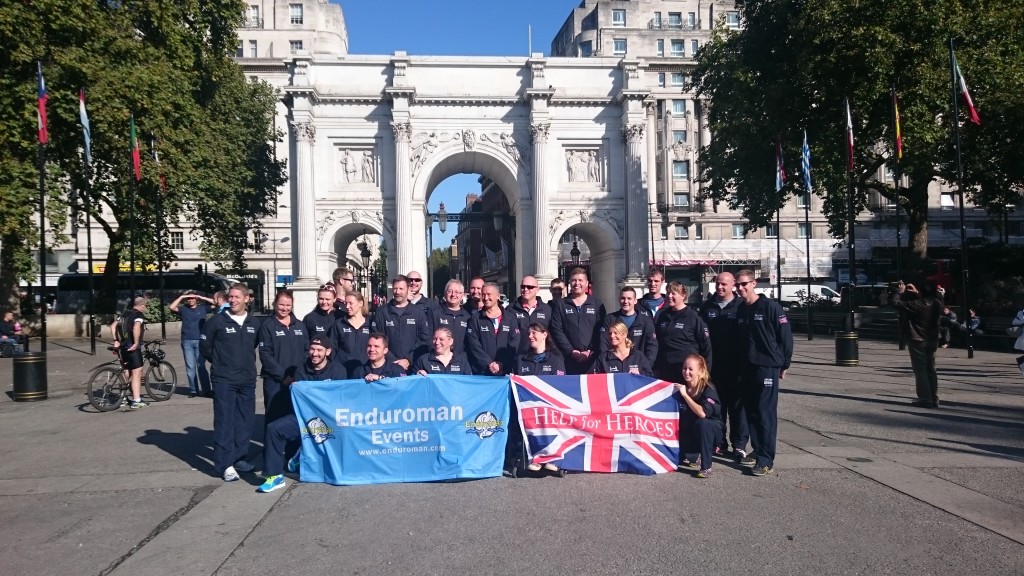
Loads of spare batteries, sleeping bags, sea sickness tablets, torches, wipes and snack bars….just some of the extras our production team needed for the trip, as they accompanied the charity Help for Heroes on their triathlon from London to Paris last week.
The biggest challenge for both the athletes and the Shout! team was the English Channel. A small boat accompanied each team and our cameraman, Rory, squeezed in one of them. Even when the sun shines and wind drops the English Channel is choppy so a massive issue was keeping the camera still enough to capture the footage. A shoulder rig, which has a similar effect to a steady-cam, really helped – and some of the resulting footage was stunning.
Our aim was to help the charity have a video record of the event – but also to secure as much coverage as possible. The strategy was to produce a series of mini B-rolls documenting what was happening , distributing them to broadcasters as soon as they’d been edited. Tricky when you’re filming and editing on the hoof! So whilst our cameraman was bobbing about on the English Channel, our producer Natalie was trying to keep on top of logistics. That included which broadcaster wanted the footage that had just been shot as well as where was the next cup of coffee coming from.
Getting the footage to the broadcasters was the trickiest challenge of all – for without a quick turn around the story would of course lose its news value. At one point distribution required a diversion to a burger joint, the rest of the time the team used a dongle.
The other logistical challenge was keeping up with who was who. National coverage was easier – they got the best pictures, some of which featured on BBC Breakfast and ITV’s Good Morning Britain. But regional TV obviously only wanted the athletes from their patch. The teams were all travelling at different speeds and our crew had to hop from one support vehicle to another when they could. Finding the right athlete to meet the requirements of a particular regional TV station was almost as tricky as keeping the camera steady over the Channel.
Back at base at our offices in Covent Garden the rest of the production team were like mother hens, clucking about their wandering brood. You can will them on, make encouraging phone calls and help out with the selling-in but you can’t give them stamina! But our team did us proud. They returned tired, probably less than fragrant and hungry – but jubilant that they had captured the highs and emotions of Help for Heroes’ teams.


