Never has there been a stronger argument for B-roll…..video illustrating a PR story, that is given to broadcasters free of charge and any copyright issues.
Of course, broadcasters say they don’t want PR produced B-roll, they want to go and film their own footage. In an ideal world they would do this, but the reality is they can’t.
Cutbacks and coronavirus
All broadcasters are feeling the squeeze – redundancies are happening in the BBC and commercial sectors, in radio and TV. There are still the same number of hours in a day, but fewer resources and people to fill them.
Add to this the restrictions of a pandemic, meaning film crews are only being sent out to cover the most essential of news stories and even when they get on location, they’re often physically restricted from doing much more than the basics.
Even guests on studio sofas have been banished. Just a couple of broadcasters are currently allowing them back in – Good Morning Britain for example has invited a few of its regular experts back, but they’re familiar faces such as Dr Hilary Jones, rather than ad hoc PR spokespeople.
Cutback and coronavirus combined you have a perfect storm – and the strongest case ever – for accompanying each PR story you’d like to see on television, with B-roll.
It’s all about the visuals
Television used to be about immediacy, the publication of news ahead of the newspapers. But since online news gave television a run for its money, often getting there first with a breaking story, television needs to focus on what it does best and that’s moving pictures.
So, if broadcast journalists don’t have the same number of crews to send out, and are hampered by social distancing restrictions even when they do arrive on location, their hands are rather tied behind their backs. Yes, they can use their own library footage but, depending on the story, this might be old. Worse for you it could feature a competitor!
Enter, the perfectly produced B-roll.
Top tips for B-roll
If you watch a B-roll it is a little bit like watching paint dry. It looks basic, not much better than raw footage that needs editing. But beneath this rough and ready appearance GOOD B-roll will have been well planned out and shot. There are two golden rules to ensure your B-roll gets on air:
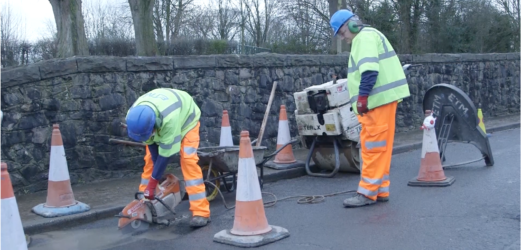
- Shoot it in a news style. Broadcasters will want to ideally mix and match it with some of their own footage, so it needs to gel seamlessly. And if they cover the story using JUST B-roll then it needs to look like something they’ve done themselves. That means nothing too fancy or glossy, not too much movement in the shots and enough variation in the pictures to create a sequence. At the most basic level you need a wide, a medium and a close up shot of each element filmed.
- Film something that broadcasters can’t easily do for themselves. These days that’s really easy – given the lack of newsroom crews and coronavirus restrictions. Ordinarily though it could mean filming somewhere difficult to access, or something that’s going to take a long time, or where there are health and safety conditions…
Which brands need B-roll?
These days potentially everyone! In the past not every story merited the investment of B-roll. But given everything we’ve just discussed above, we’d now recommend if you want to be on television news then you need to consider providing the pictures.
At the most fundamental level think branding – what pictures encapsulate a company. This could be a head office with signage, branded trucks on the road, or products being used by customers. Pictures like these are not the most exciting, so try and get people in them where possible. They are however more interesting than several minutes of one spokesperson doing a sofa interview and are commonly used by business programmes who will “float” the pictures over part of an interview.
It’s even better when a B-roll is shot specifically to illustrate a PR story. Given the choice between a PR story that’s presented as a press release and one that comes with B-roll the latter is always going to be chosen.
So, you’re looking to produce a B-roll?
If you’d like more detail about B-roll production, perhaps with specific reference to your company or clients, do give us a call on 020 7240 7373. Or you can email me at Keren@shoutcommunications.co.uk